












Clear Guidance for IRSNotices,TaxIssues& AuditPreparation
Receiving a letter from the IRS can create immediate concern, especially when the notice mentions missing information, unpaid tax, penalties, proposed changes, or an examination of a return. The most important step is to remain calm, read the notice carefully, and respond within the stated deadline. Ignoring IRS correspondence may reduce the time available to correct an error, provide documentation, dispute a proposed adjustment, or explore available payment options.
Shafiquil Muhshna provides IRS resolution and audit support for individuals, self-employed professionals, and small businesses that need help understanding tax correspondence and organizing an appropriate response. Support may include reviewing the notice, comparing it with the filed return, identifying requested documents, correcting tax records, preparing amended information, and coordinating with an enrolled agent, CPA, or tax attorney when formal representation is required.
Services are available throughout Fort Lauderdale, Wilton Manors, Hollywood, Plantation, Sunrise, Davie, and Miami, with secure remote support available nationwide.
An IRS Notice Does Not Always Mean You Did Something Wrong
The IRS sends notices for many reasons. A letter may request additional information, explain a change made to a return, identify a balance due, report a mismatch between income records and the filed return, or notify the taxpayer that a return has been selected for examination. Each notice includes a notice or letter number, the tax year involved, the reason for contact, and instructions explaining what action may be required.
An audit selection does not automatically mean that fraud or intentional wrongdoing occurred. The IRS may examine a return to verify that income, expenses, deductions, and credits were reported accurately. Audits may be conducted by mail or through an in-person interview, and the IRS generally begins the process by sending written correspondence rather than making an unexpected demand by phone.
Responding effectively begins with understanding the exact issue instead of assuming the worst. Some notices can be resolved by providing a missing document or explaining information already reported. Other matters may require a corrected return, a written disagreement, payment arrangements, or assistance from a professional authorized to represent the taxpayer before the IRS.

IRS Resolution and Audit Support May Include:
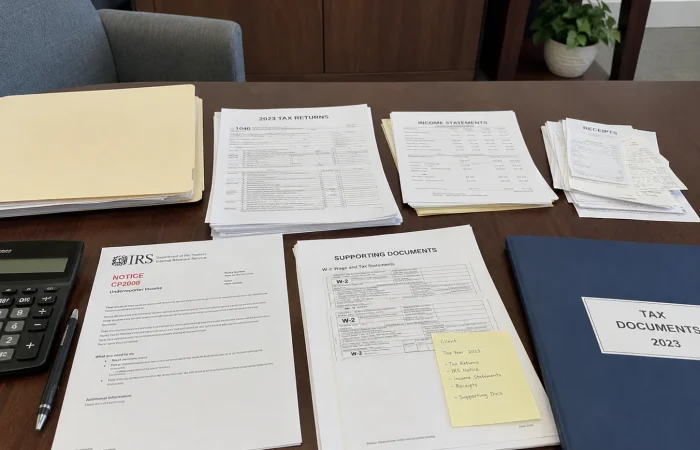
- Review and explanation of IRS notices and correspondence
- Comparison of the notice with the original tax return and supporting records
- Organization of documents requested during a correspondence or office audit
- Assistance correcting filing errors or preparing amended tax information
- Coordination with an enrolled agent, CPA, or tax attorney when authorized representation is needed
Responding Carefully Before the Deadline Passes
Every IRS notice should be reviewed as soon as it arrives. The response deadline, tax year, proposed adjustment, requested documentation, and contact instructions should be identified before any action is taken. Sending incomplete information, responding to the wrong address, or missing a deadline can make a manageable issue more difficult to resolve.
Shafiquil Muhshna helps clients organize the facts before responding. The filed return can be compared with W-2s, 1099s, bank records, expense documentation, prior correspondence, and other supporting information to determine whether the IRS notice appears accurate. When the notice is correct, the next step may involve correcting records, paying the balance, or reviewing payment options. When the taxpayer disagrees, the response should clearly explain why and include documentation that supports the position.
IRS correspondence should never be answered with guessed numbers or unsupported explanations. A careful response is based on the return, reliable records, and the specific instructions provided in the notice.

A structured review can make an IRS issue feel more manageable. The process begins by identifying what the IRS is asking, what tax period is involved, and whether the notice proposes a change or requests evidence. Relevant tax returns and financial records are then collected, discrepancies are reviewed, and the available response options are explained. When the matter falls outside the permitted scope of a tax return preparer, the client can be referred to or coordinated with an appropriately credentialed representative.
Common IRS Issues That May Require Professional Support
Taxpayers may receive correspondence related to unreported income, mathematical corrections, filing-status questions, dependent eligibility, business deductions, tax credits, late returns, unpaid balances, or missing documentation. Businesses may also face questions involving payroll filings, contractor reporting, business income, deductible expenses, or differences between tax returns and information reported by third parties. Some issues begin with a simple mismatch. An employer, bank, payment processor, brokerage, or other institution may report information to the IRS that does not match the return. In other cases, a tax document may have arrived after filing, income may have been entered incorrectly, or supporting records may not have been included when requested. Identifying the source of the difference is essential before deciding whether to agree, disagree, or amend the return.
A professional review helps separate the emotional concern created by the notice from the actual tax issue that must be addressed. Once the facts are organized, the client can make a more informed decision about the appropriate response. IRS audits may take different forms. A correspondence audit is generally handled through the mail and requests documents related to specific items on the return. An office or field examination may involve an interview and a broader review of records. At the conclusion of an examination, the IRS may accept the return as filed or propose changes that affect the tax owed or refund. The documents required depend on the issue being examined. These may include receipts, invoices, mileage logs, bank statements, proof of payment, contracts, charitable contribution records, dependent documentation, payroll reports, or business ledgers. The purpose is not to provide every financial document available, but to respond accurately to the specific items identified by the IRS.
What Clients Can Expect During the Resolution Process
Every engagement begins with a careful review of the IRS letter and the tax return connected to it. Shafiquil Muhshna explains the notice in clear language, identifies the required action, and helps the client collect information that may support an accurate response. The scope of support depends on the type of issue and the professional authority required. Tax return preparers who are not attorneys, CPAs, or enrolled agents have limited representation rights before the IRS. Some may assist with returns they prepared under specific conditions, but they generally cannot represent clients in appeals or collection matters. When broader representation is required, the client should work with an authorized professional.
Every engagement focuses on
- Understanding the notice, deadline, and tax period involved
- Reviewing the filed return and relevant financial records
- Identifying missing, incorrect, or inconsistent information
- Organizing a clear and properly documented response
- Determining when referral to an authorized representative is appropriate
“An IRS notice should be taken seriously, but it should not create panic. The first responsibility is to understand exactly what the IRS is requesting, review the original return carefully, and respond with complete, accurate documentation before the deadline.”
–Shafiquil Muhshna, IRS Registered Tax Return Preparer
Preparing for an IRS Audit With Organized Documentation
Good audit preparation begins with the notice itself. Clients should confirm the tax year, type of examination, issues being reviewed, response deadline, and method for submitting information. The original return should then be compared with all relevant records so the documents provided support the figures that were reported.
Organization matters because audit responses should be clear and easy to follow. Records can be grouped by issue, labeled by category, and matched to the amounts shown on the return. A written explanation may be useful when a transaction is not immediately clear from the supporting document. Providing a structured response can reduce confusion and help the examiner understand how the return was prepared.
Clients should keep copies of everything sent to the IRS, including letters, forms, supporting records, delivery confirmation, and notes from telephone conversations. Original documents should generally be protected unless the IRS specifically requires them. Maintaining a complete communication file also makes it easier to track the history of the matter if additional correspondence follows.
An audit may result in no change, an agreed adjustment, or a proposed adjustment the taxpayer disputes. When proposed changes are issued, the notice should explain the available response or appeal procedures. Clients should not sign an agreement until they understand the changes, the resulting tax, and any penalties or interest that may apply.
If a taxpayer disagrees with an assessment because relevant information was not previously considered, audit reconsideration may sometimes be available under qualifying circumstances. The IRS describes this process as an opportunity to request reevaluation of certain unpaid audit assessments using information that was not previously reviewed.
Matters involving formal appeals, collection enforcement, complex legal questions, suspected fraud, substantial disputed liability, or litigation should be referred to an enrolled agent, CPA, or tax attorney with appropriate authority and experience. Receiving the right level of support is more important than attempting to handle every matter through one service provider.
Payment Options When an IRS Balance Cannot Be Paid in Full
A balance due should not be ignored simply because full payment is not immediately possible. The IRS offers several payment options, although eligibility, costs, and approval requirements vary. Filing required tax returns on time remains important even when the amount owed cannot be paid in full, because failure-to-file and failure-to-pay consequences are different.
An installment agreement may allow an eligible taxpayer to make scheduled monthly payments. The proposed payment should be realistic because missing payments or failing to remain compliant with current filing obligations can place an agreement at risk. Interest and applicable penalties generally continue while a balance remains unpaid.
An Offer in Compromise may allow certain qualifying taxpayers to resolve a liability for less than the full amount, but it is not available to everyone. The IRS evaluates income, expenses, asset equity, ability to pay, and other circumstances. Required returns generally must be filed, current estimated payments must be made, and employers must meet applicable federal tax deposit requirements before an offer can be considered.
Some taxpayers experiencing serious financial difficulty may need to discuss other collection alternatives with an authorized representative. No professional should promise that an IRS balance can automatically be eliminated or settled for a small percentage. Every resolution option depends on the taxpayer’s documented financial circumstances and IRS approval.
IRS Notice and Audit Support Across South Florida and Nationwide
Individuals and businesses throughout Fort Lauderdale, Wilton Manors, Hollywood, Plantation, Sunrise, Davie, and Miami can receive private assistance reviewing IRS correspondence and preparing supporting documentation. Local consultations provide an opportunity to examine the notice, tax return, financial records, and response requirements together.
Remote support is also available for clients throughout the United States. IRS letters, tax returns, and supporting documents can be reviewed through secure digital methods, while scheduled consultations allow questions to be discussed clearly. Remote assistance follows the same careful process as local service: identify the issue, verify the facts, organize records, explain the available next steps, and determine whether a more highly credentialed representative is required.
IRS issues frequently connect with incomplete bookkeeping, missing tax returns, inaccurate income reporting, payroll discrepancies, or prior filing errors. Addressing the immediate notice may therefore reveal broader recordkeeping problems that should also be corrected. Organizing those records can help resolve the current matter and reduce the likelihood of similar issues in future tax years.
Shafiquil Muhshna can assist clients in reviewing tax documents, understanding correspondence, preparing corrected information, and coordinating related tax preparation work. Formal representation services are provided only when permitted by applicable IRS rules; otherwise, the client can be referred to an enrolled agent, CPA, or tax attorney.
Early action provides more time to gather documents, correct mistakes, communicate with the appropriate professional, and respond before important rights or deadlines are affected.
Take the Next Step Before the IRS Deadline Arrives
An unopened IRS letter does not disappear, and delaying a response rarely makes the issue easier. Taking action early allows time to understand the notice, locate supporting documents, correct errors, explore payment options, and determine whether professional representation is necessary.
Shafiquil Muhshna provides calm, confidential, and detail-focused support for taxpayers who are uncertain about what an IRS notice means or how to begin preparing a response. Each matter starts with a review of the correspondence and the original return so the client receives guidance based on the actual issue rather than assumptions.
Clients should bring or securely provide every page of the IRS notice, the related tax return, prior correspondence, proof of payments, and any documents connected to the questioned income, expense, deduction, or credit. Complete information makes the review more useful and helps prevent unnecessary delays.
No particular IRS result can be guaranteed. The purpose of professional support is to help the client understand the matter, present accurate information, protect important deadlines, and obtain appropriately credentialed representation when the situation requires it.
Schedule a confidential consultation with Shafiquil Muhshna to review your IRS notice, organize your records, and determine the most responsible next step.